




Share This Article
Hiring packers and movers in India is one of those decisions where the cheapest option almost always ends up costing more. A low quote, a verbal assurance, and zero documentation — and then a damaged TV arrives with no recourse.
This checklist covers everything from getting the first quote to filing a damage claim, so that your move goes smoothly and you are protected if it does not.
Table of Contents
Getting Quotes — What to Ask {#getting-quotes}
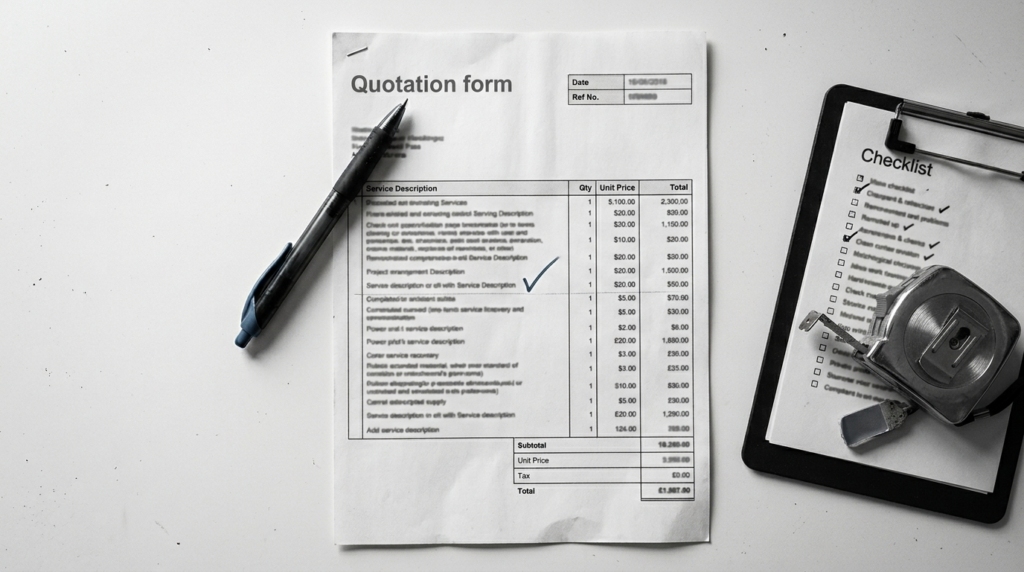
Get quotes from at least three companies before deciding. For each company, ask:
Is the quote for door-to-door service — including packing, loading, transport, unloading, and unpacking? Or does it cover only transport? What is included in the packing materials — will they use new boxes, or recycle old ones? Do they offer transit insurance, and if so, what is the coverage amount and what is excluded? Do they provide a GST invoice? A company that cannot provide a GST invoice is either unregistered or working informally — both are risk factors. What is their process for claiming compensation for damaged or missing items? Can they provide references from recent moves in your city?
Compare quotes on a like-for-like basis — the cheapest quote often excludes items that more complete quotes include.
Verifying the Company {#verifying}
[IMAGE BLOCK 2 — Mid-article]
Before confirming any booking, verify the company’s credentials:
Check for GSTIN — search the GSTIN number on the GST portal to confirm registration. Check Google reviews — look for reviews that mention specific experiences, not just star ratings. A company with fifty five-star reviews with no text is less informative than one with twenty detailed reviews. Check for a physical office address — call the landline if listed, not just the mobile number. Ask which moving association they are members of — while membership is not mandatory, legitimate companies are often registered with the Indian Association of Movers (IAM) or similar bodies. Check their Terms and Conditions document for transit insurance coverage details and damage liability caps.
Before They Arrive — What to Prepare {#before-arrive}
Make a detailed inventory list of all items being moved — room by room. Note the current condition of high-value items: TVs, refrigerators, washing machines, computers. Photograph everything before packing begins. This becomes the baseline for any damage claim.
Segregate items that will not be moved by the packers and move them yourself — documents, jewellery, medications, fragile irreplaceable items. These travel with you, not in the truck.
Confirm arrival time the evening before and have the full address with building access instructions ready.
Arrange for elevator booking at both the old and new building if required — some societies require advance booking and have restricted moving hours.
On Moving Day {#moving-day}
Be present throughout. Do not leave the packers to work without oversight — particularly for fragile items and electronics.
Watch how items are packed — adequate bubble wrap for electronics and fragile items, proper carton strength for heavy items. If you see inadequate packing, say so immediately.
Do not sign the Loading Manifest (the list of items put into the truck) without checking it against your own inventory list. If items are missing from the manifest, add them before signing.
Note the truck registration number.
At the New Address {#new-address}
Do not sign the Delivery Manifest until you have checked every item. Check every carton for obvious external damage before it is brought inside. Open and verify high-value electronics and fragile items before signing off.
If any item is damaged or missing, write “Received with damage” or “Not received” against that item on the Delivery Manifest before signing. Photograph the damage immediately. Do not sign a clear delivery receipt if items are damaged or missing.
If Items Are Damaged or Missing {#damaged}
File a written claim with the movers within 24 to 48 hours of delivery — do not delay. Include photographs, the Delivery Manifest with your notation, and your original inventory list.
If the company has transit insurance, initiate the claim through the insurer. The mover should provide you with the insurer’s contact details and claim process.
If the company refuses to acknowledge the claim or compensate adequately, file a complaint with the consumer court. Packers and movers are service providers under the Consumer Protection Act — damage or loss of goods is a deficiency in service and is actionable.
Red Flags to Watch For {#red-flags}
No physical office — only a mobile number and a website with stock photos. Significantly below-market quotes — typically 40% or more below other quotes for the same service scope. Refusal to provide GST invoice. Insistence on full cash payment before delivery. No written contract or receipt for booking. Demand for extra payment on moving day citing reasons not discussed during quoting. Unwillingness to share transit insurance policy details.
Related read: How to shift house in India — complete timeline ?
Final Thought
The difference between a good move and a bad one is almost entirely in the preparation and documentation. A reputable packer with proper paperwork and transit insurance is worth the higher quote. A cheap mover with no documentation is the risk that costs more in the end.
Everything you need for a smooth move in India. Browse our full guide library ?